

 If you’re experiencing problems with your satellite dish, the first step is to identify the cause. Perhaps you want to receive more TV channels, or maybe you’re dealing with reception issues. For example, some channels may have stopped working, or the picture may become unstable during bad weather. Let’s explore the most common situations and their solutions.
How to Receive More TV Channels
If your goal is to receive more TV channels, increasing the signal strength is not the answer. Instead, consider installing an additional satellite dish. Alternatively, if there are nearby satellites within range, you can install another LNB on your existing dish.
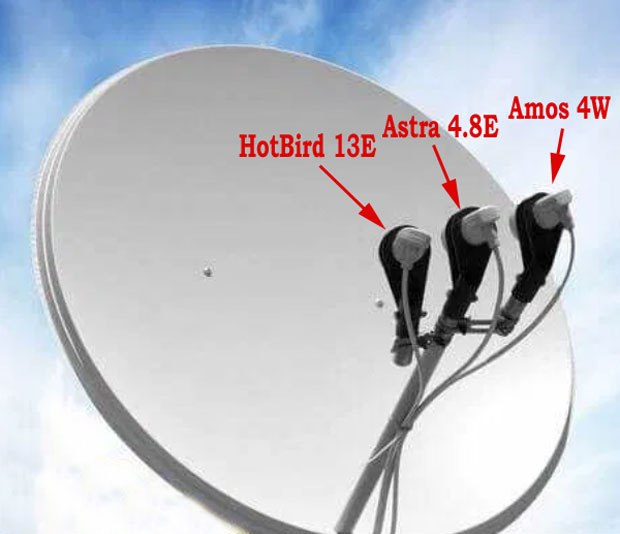
For example, if your dish is aligned with Astra 4.8°E (formerly Sirius), you can install additional multifeed holders to mount two extra LNBs—one for Amos 4°W and another for Hot Bird 13°E.
If your dish is pointed at Express 80°E, you can also install two additional LNBs to receive signals from ABS 75°E and Yamal 90°E, significantly expanding the number of available TV channels.
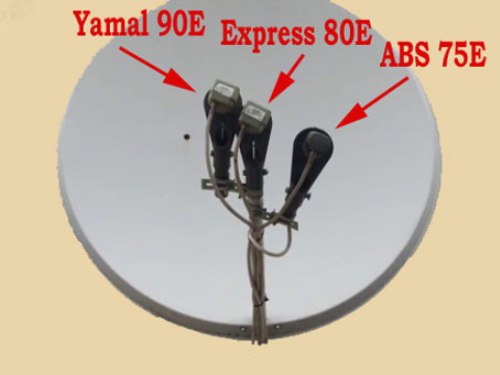
Installing multiple LNBs on a single satellite dish is recommended only if the dish has a diameter of at least 90 cm (36 inches). Smaller dishes, such as 60 cm models, usually do not provide sufficient signal strength for reliable reception with side-mounted LNBs.
If your satellite dish has more than one LNB installed, you’ll also need a DiSEqC switch to connect them. You can learn more about configuring a DiSEqC switch by following this guide.
Key Takeaway
If you want to receive more TV channels, the best solution is to install additional LNBs on your existing dish or set up another satellite dish aimed at different satellites. Simply increasing the signal strength of your current setup will not provide access to additional channels.
Common Satellite Signal Problems
A satellite dish may lose signal quality for a variety of reasons. The most common symptoms include:
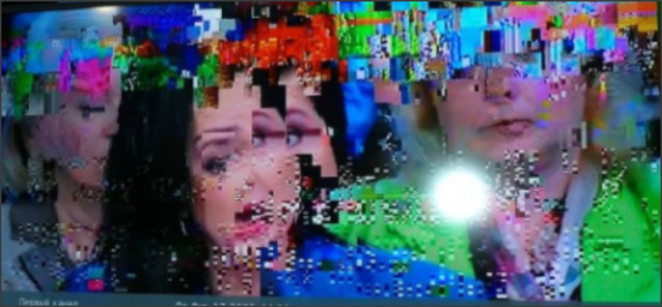
- The picture becomes pixelated or breaks up into blocks.
- The image freezes or becomes unstable.
- A “No Signal” message appears on the screen.
Cause: The Satellite Dish Has Moved Out of Alignment
One of the most common causes of poor reception is a misaligned satellite dish. Both the dish and the LNB require extremely precise positioning—often within just a few millimeters. Even a slight movement of the dish or the LNB, especially when the LNB is mounted on a multifeed bracket, can significantly reduce signal quality or result in a complete loss of reception.
A satellite dish can shift for several reasons, including strong winds or slight movement of the building on which it is mounted. Another common cause is loose mounting bolts securing the LNB, allowing it to move out of position. In either case, the entire system should be carefully realigned.
Cause: Damaged Coaxial Cable
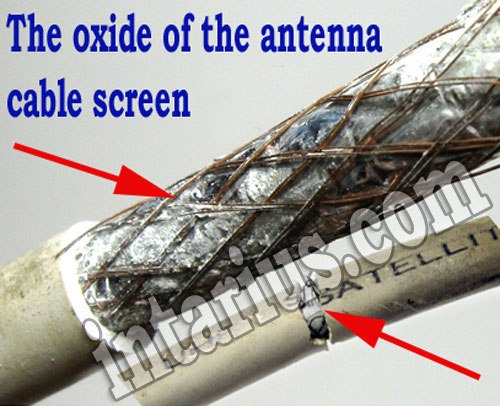
Picture pixelation, intermittent reception, or a complete loss of signal may also be caused by a damaged satellite cable. Over time, the cable’s outer insulation can crack, allowing moisture to enter. This leads to corrosion of the cable shielding, which weakens the signal.
As a result, the picture may become heavily pixelated, some channels may disappear, or the signal may eventually be lost altogether. This can affect the entire satellite system or only a specific LNB if the damaged section is located between the LNB and the DiSEqC switch.
To learn when it’s time to replace your satellite cable, read this article.
Cause: Faulty LNB
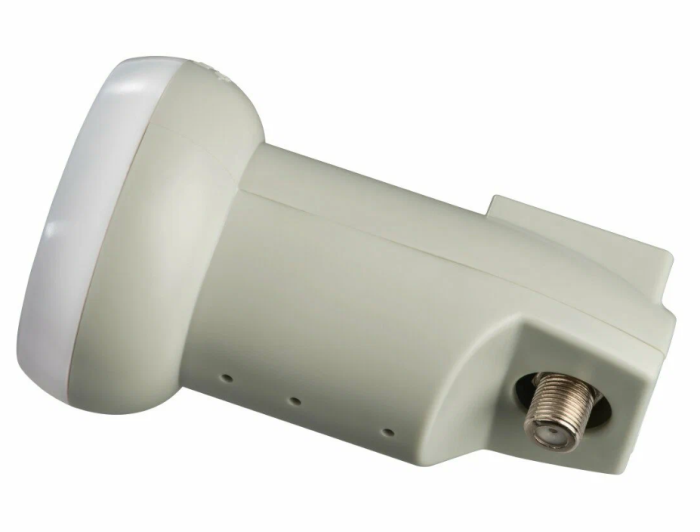
Another possible cause of signal problems is a faulty LNB (Low Noise Block converter).
An LNB can fail completely, causing all channels received through it to disappear. If your satellite dish has only one LNB installed, you will lose reception of every channel. Partial failures are also common. For example, the LNB may develop what’s often referred to as a “dead frequency,” where channels on certain transponders continue to work normally while others become heavily pixelated or disappear completely.
In most cases, the only reliable solution is to replace the faulty LNB.
Cause: Faulty DiSEqC Switch
A defective DiSEqC switch can also cause picture pixelation, intermittent reception, or a complete loss of certain channels.
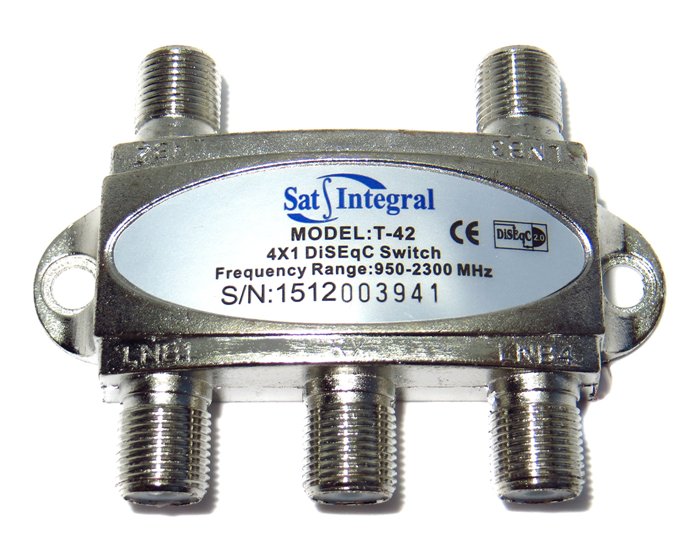
If your installation uses only one LNB, you won’t have a DiSEqC switch. However, systems with two or more LNBs rely on a DiSEqC switch to select the desired satellite.
Like any electronic component, a DiSEqC switch can fail. One of its ports may stop working, preventing channels from a specific satellite from being received. In this situation, you can either replace the DiSEqC switch or connect the LNB to an unused port if one is available. After moving the cable, remember to update the corresponding DiSEqC port settings in your satellite receiver.
The video below demonstrates how to configure DiSEqC ports correctly.
Cause: Satellite Receiver Failure
The satellite receiver itself can also be responsible for reception problems. Symptoms may include missing channels, picture pixelation, freezing, or complete signal loss.
A common hardware failure is a defective capacitor inside the receiver. Capacitors typically fail on the power supply board, although they can also fail on the main board. Replacing the faulty component often restores normal operation.
The following video demonstrates one method of repairing a satellite receiver by replacing a failed capacitor.
Other Possible Causes
External factors can also reduce satellite signal quality.
Heavy rain, snow (especially wet snow), or hail can weaken the satellite signal enough to cause picture pixelation, freezing, or even a complete loss of reception. This is normal, as severe weather absorbs and scatters part of the satellite signal before it reaches the dish.
Another common seasonal problem is tree foliage. During spring and summer, leaves may gradually block the line of sight between the satellite dish and the satellite. Even partial obstruction can noticeably reduce signal quality or cause certain channels to disappear.
A simple way to check this is to temporarily move a branch aside. If reception immediately improves, you’ve found the source of the problem.
Possible solutions include trimming branches, pruning the tree, or relocating the satellite dish to a position with a clear view of the satellite. Since relocating a dish requires precise alignment, it’s usually best performed by an experienced satellite installer.
Whenever possible, eliminate the actual cause of signal loss instead of trying to artificially increase the signal level.
How to Increase Satellite Signal Strength
The most effective way to improve satellite signal reception is to use a larger satellite dish.
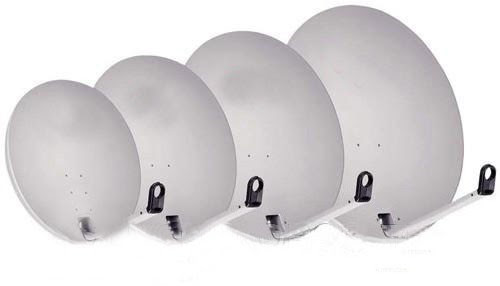
A larger reflector collects more of the incoming satellite signal and focuses it onto the LNB. As the reflector diameter increases, overall signal strength and reception stability also improve, especially during rain, snow, and other adverse weather conditions.
Can a Larger Satellite Dish Improve Signal Quality?
If you use a smaller satellite dish, bad weather can significantly reduce signal quality, causing pixelation, freezing, or complete signal loss. A larger dish collects more of the satellite signal, providing a stronger and more stable reception even in rain or snow.
It is also important to understand that signal strength is not the same across every frequency transmitted by a satellite. During adverse weather conditions, some transponders may become unstable while others continue to work normally. This is perfectly normal and depends on the broadcast power of each frequency.
Can Homemade Signal Boosters Help?
You may come across various DIY methods that claim to improve satellite reception. However, their effectiveness has never been consistently proven.
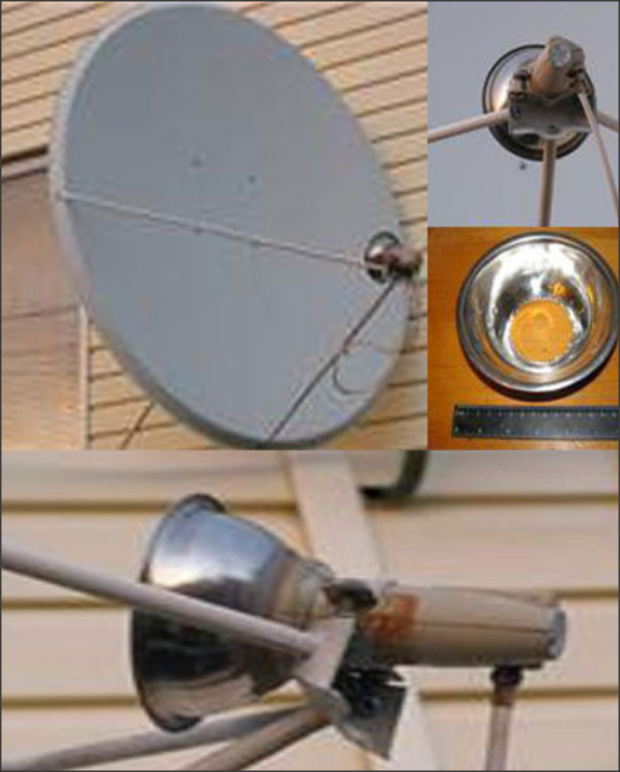
One popular idea is attaching a metal bowl or reflector around the LNB on dishes larger than one meter in diameter. Although some users report positive results, I have not personally tested this method and therefore cannot recommend it as a reliable solution.
Final Recommendation
If your goal is to improve satellite reception, first identify the real cause of the problem. Weak or unstable reception is usually caused by incorrect dish alignment, damaged coaxial cable, a faulty LNB, a defective DiSEqC switch, hardware issues with the receiver, or environmental obstacles such as heavy rain or nearby trees.
After eliminating these problems, the most effective way to increase signal strength is to install a larger satellite dish. A reflector with a greater diameter captures more of the incoming satellite signal, providing better reception and more reliable viewing, especially during poor weather conditions.