

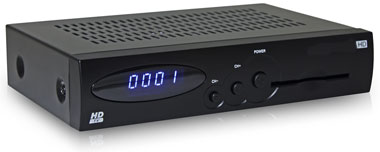
Not long ago, owning a satellite dish and a standard-definition (SD) receiver was considered a luxury. Today, satellite receivers have evolved far beyond basic television reception. Modern models support HD and Ultra HD broadcasts while offering a wide range of advanced features, making them true multimedia devices.
However, not all satellite receivers offer the same capabilities. Entry-level models provide basic satellite TV reception, while more advanced receivers support the latest broadcasting standards, Internet services, media playback, and many additional technologies. Understanding these features will help you choose the receiver that best meets your needs.
Supported Standards and Technologies
- Frequency Bands: Modern satellite receivers support multiple frequency bands, including Ku-band (the most commonly used), C-band, and L-band. This enables them to receive signals from various satellite systems.
- Broadcast Standards: Support for DVB-S, DVB-S2, and the newer DVB-S2X standard provides improved transmission efficiency and higher data rates. Some receivers also include a built-in DVB-T2 tuner for receiving terrestrial digital television using a standard TV antenna. These models are commonly referred to as Combo receivers.
- Video Resolution: Support for Full HD and 4K Ultra HD (3840 × 2160) delivers excellent picture quality on modern televisions.
- Video Compression: Support for the efficient HEVC (H.265) codec allows high-quality HD and 4K video transmission while requiring less bandwidth.
- HDR Support: Many modern receivers support High Dynamic Range (HDR), providing improved brightness, contrast, and more realistic colors.
- T2-MI Support: Some advanced satellite receivers support T2-MI (T2 Modulator Interface), a technology used to transmit DVB-T2 multiplexes via satellite. Receivers with T2-MI support can process these streams directly, allowing users to receive terrestrial DVB-T2 multiplexes distributed through satellite networks.
Main Features
- PVR (Personal Video Recorder) and Timeshift: Record TV programs to a USB flash drive or external hard drive and pause or rewind live television using the Timeshift feature.
- Internet Connectivity: Most modern receivers include an Ethernet (LAN) port, built-in Wi-Fi, or support for USB Wi-Fi adapters, providing easy access to online services.
- Online Services: Many receivers support IPTV, YouTube, DLNA, and other streaming technologies, giving users access to online television, movies, music, and multimedia content.
- Card Readers and CI/CI+ Slots: Built-in smart card readers and CI/CI+ slots allow the use of conditional access modules for viewing encrypted and subscription television channels.
- Multi-Tuner Systems: Some models are equipped with multiple tuners, allowing you to watch one channel while recording another or receive signals from multiple sources simultaneously.
- Media Player: Built-in media players support playback of photos, music, and videos from USB flash drives and external hard drives.
- Additional Features: Electronic Program Guide (EPG), scheduled recording, subtitles, teletext, parental controls, and many other functions make modern satellite receivers even more convenient to use.
Conclusion
Modern satellite receivers have become much more than simple TV tuners. With support for the latest broadcasting standards, Ultra HD video, Internet services, multimedia playback, and advanced recording features, they serve as complete home entertainment centers. Choosing the right receiver depends on your viewing requirements, the technologies you need, and your budget.